Give EU visas to Russiaʼs brightest to hollow out Putinʼs war machine
Kremlin critic Mikhail Khodorkovsky says Ireland must lead the way to a consolidation of European security policy during its term as president of the union
by John Mooney
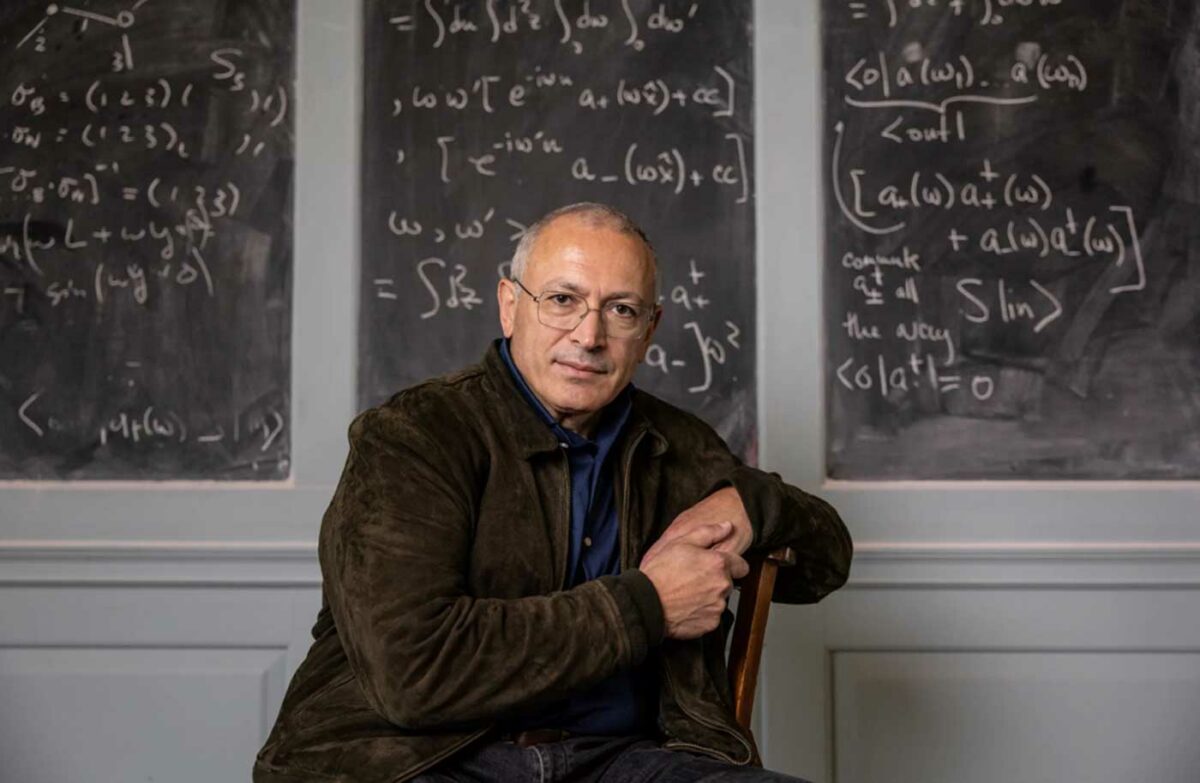
‘Iʼm afraid in the next five to ten years, Europe will be in a cold war with Russia,” Mikhail Khodorkovsky says. It is a grim forecast for the European Union; but for the man who once ran an energy empire, it is a mathematical certainty.
Ireland is preparing to assume the European presidency, when it will be tasked with hollowing out the Russian war machine. For Khodorkovsky, its role will be critical. His assessment is blunt: Europe is not prepared for the reality of the Russian state it is facing.
The former head of Yukos Oil, who spent a decade in a Siberian penal colony after challenging President Putin, speaks with the analytical detachment of a man who has paid the cost of defiance. He does not deal in polite euphemisms.
He believes the government must use this window to shake Europe out of its lethargy. If Ireland fails to lead a consolidation of security policy now, he warns, Putin will have every incentive to “probe and provoke” the continentʼs soft underbelly.
Perhaps his most striking point is why Ireland, and not the Baltic states or Poland, must lead the European charge.
“When the Baltic states speak, Europe is sceptical because they have historical claims,” Khodorkovsky says. Ireland, conversely, is seen as having no “bias”.
In the poker game of EU diplomacy, Ireland is the “neutral” player whose sudden alarm would carry the most weight. He believes Dublin can “consolidate the voices of Europe” in a way that the frontline states cannot, precisely because its warning would be seen as objective.
A central failure, Khodorkovsky argues, is industrial. He believes Europe is losing an arms race not through a lack of talent, but through a lack of scale. He describes a continent producing “boutique” weaponry while its enemy has moved to a total-war footing.
“Europe doesnʼt have enough production of military equipment, because that military equipment in Europe is so expensive. Ten times more expensive than in Russia,” he says. “Itʼs because of such small production. No specialised machinery. As a result, itʼs like it is handmade.”
While the West struggles with costs, Putin has secured his supply lines through proxies. Khodorkovsky admits he underestimated this resilience four years ago.
Once recognised by Amnesty International as a “prisoner of conscience” during his decade-long imprisonment in Siberia, Khodorkovsky has since transitioned from Russiaʼs most famous political prisoner to a leading figure of the opposition-in-exile.
His first piece of advice for the Irish presidency is an admission of failure: Europe has lost its “expertise” on Russia. The Cold War scholars are gone, replaced by a vacuum that the Kremlinʼs disinformation fills with ease.
“We have to rebuild it. Right now,” he says. He advises Ireland to lead a pan-European effort to integrate anti-war Russian and Ukrainian experts, programmers, engineers and former insiders directly into the heart of EU policy. He acknowledges the risks, the possibility of FSB double agents, but argues the risk of ignorance is far greater.
Talented Russians could be given visas to live in Europe, depriving the regime of the talent it needs. He proposes a novel “presidency initiative” that sounds more like corporate poaching than traditional diplomacy. He wants Ireland to lead a targeted effort to hollow out Putinʼs industrial base by offering “talent corridors” for Russiaʼs brightest.
Instead of a blanket welcome, he suggests a strategic carve-up: “Ireland could say, ‘We will receive the IT specialists. France takes the cultural elite. Germany takes the engineers.ʼ”
Putin, he notes, is already moving to block this exit. The Kremlin is dismantling the international “Bologna system” of university education to trap specialists within the borders. “Putin understands this. Thatʼs why he is now refusing the Bologna system … He wants to create a barrier for Russian specialists so that they canʼt leave.”
There is a more immediate humanitarian crisis that Khodorkovsky believes Dublin should champion. Putin is effectively stripping citizenship from the 100,000 anti-war Russians already residing in Europe.
“He refuses to give them new Russian passports because they have expired. He refuses to give documents, new documents, identity documents to children,” Khodorkovsky says. “They become de facto noncitizens … Thatʼs a serious issue that Ireland should be raising in Europe.”
In the realm of propaganda, Khodorkovsky observes a surreal shift. While the United States was once the primary target of Russian ire, the crown of the “great villain” has been handed to Britain, a detail that carries weight for an Irish presidency navigating Anglo-Russian tensions.
“Two, three years ago, the main enemy of Russia in public opinion was the Americans. Now itʼs the British. Itʼs absolutely funny,” he says. “I like to read some Russian science fiction. Its enemy is British. Is British. Is British.”
Khodorkovsky also warns Ireland not to be distracted by Putinʼs grandstanding in the High North. He dismisses the “strategic importance” of the Arctic as a mirage designed for destabilisation. “Thereʼs no economic reason; itʼs military. Military because itʼs destabilising. Because itʼs a possibility to show Americans you are not safe enough.”
Sitting at the centre of a €300 billion question, Ireland during its presidency will face immense pressure to seize frozen Russian assets to fund the war in Ukraine. For a man who had his own multibillion-dollar empire dismantled and stolen by the Kremlin, Khodorkovskyʼs answer is startlingly protective of the rule of law.
“I prefer to see this money is free,” he says, leaning forward. “The value of Europe is the stability of private property. It is much more important than Putin.” He warns that if Ireland leads the charge to bypass the courts and simply confiscate these assets, it would destroy the very thing that makes the West superior to the Kremlin: the predictability of the law.
“Donʼt show the world that Europe is an unstable place for private property,” he says. Instead, he suggests a “presidency compromise” using the assets as collateral for loans rather than outright confiscation.
The most immediate physical challenge for the Irish presidency isnʼt in a Brussels meeting room, but in the choppy waters off the Cork and Kerry coasts where a “shadow fleet” of ageing, under-insured Russian tankers is threading through the Irish exclusive economic zone.
Khodorkovsky suggests using asymmetric pressure: you do not need to sink the ships, you need to make them expensive to run. “If you show you arrested somebody, even like in France, after a week they released the ship. But all transportation knows they were arrested. Nobody knew they were released. Its price for transportation will go up again.”
Khodorkovskyʼs final warning for Dublin is that the presidency will be a test of nerves. He predicts that the Kremlin will view the Irish term as an opportunity to “probe” for European disunity.
“If Ireland doesnʼt keep silent about Putinʼs Russia, his standard reaction is to find conflict points inside Ireland,” he says. He isnʼt talking about tanks on the streets of Dublin; heʼs talking about influence operations to provoke “dead volcanoes”, such as anti-immigration protests and other social fissures that already exist. “He will find a dead volcano and make it rumble,” he says.
Despite the grim forecast, Khodorkovsky remains a long-term optimist for Russia. He argues that Russia is a “natural ally” for Europe, possessing the raw materials the Continent needs in exchange for the technology Russia lacks. The Kremlinʼs pivot to China, he believes, is a marriage of convenience that will eventually fail.
“For China, Russia is a competitor,” he notes. “China never sends to Russia real technology.”
Khodorkovsky is not asking Ireland to become a military superpower, but to show “maturity”. He believes that if Ireland can spend its six-month presidency making European intelligence more professional, hollowing out Russiaʼs technical elite and standing firm on the “premium” price of Russian oil, it will have been worth it.
“If Europe manages to show its readiness in the next six months, then Putin will have less incentive to try to provoke.”
The interview was conducted by John Mooney and was originally published in The Times and The Sunday Times