He was Russia’s richest man and spent 10 years in the gulag. Mikhail Khodorkovsky on Ukraine, Putin and failed talks to merge with a U.S. oil giant
The former Yukos chief, in an exclusive interview, says he’s had ‘indirect’ talks with the Kremlin
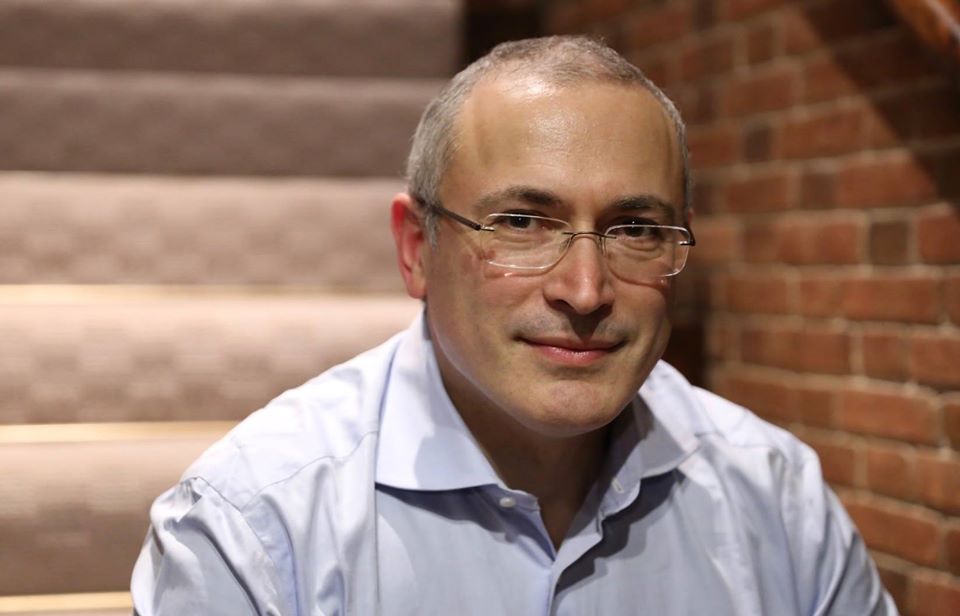
Once’s Russia’s richest man, Mikhail Khodorkovsky doesn’t expect peace with Ukraine anytime soon.
In an exclusive interview with MarketWatch, Khodorkovsky said that Russian President Vladimir Putin has no serious interest in putting an end to the war right now, having long since abandoned the pragmatism that characterized his earlier years. An article posted on Khodorkovsky’s think tank’s website explains more fully why he thinks the Kremlin is in no rush.
Speaking from his private office in central London, Khodorkovsky articulated through an English translator his exasperation with the White House for making things comfortable enough for Putin to continue the war, and with sanctions that are not really putting severe pressure on Russia.
“From the practical point of view, I had always thought that Putin has a serious interest in putting an end to the war now. Because the closer to the midterm elections in the United States, the weaker [President Donald] Trump is. And Trump is the person who is making the whole situation comfortable [for Putin] for right now,” he said.
Khodorkovsky was once the richest man in Russia, an oil tycoon worth $15 billion in 2003 as the head of the oil and gas company Yukos. A year later, however, after a political dispute with Putin, he found himself incarcerated in Russia’s penal system on charges of tax evasion and fraud, and began a prison sentence that would last until 2013, when he was pardoned and released on grounds of clemency.
“Over the years I have been having, from time to time, contacts with the Kremlin, mostly indirect contacts. I had indirect contacts with [the now-deceased Wagner Group chief Yevgeny] Prigozhin, for example, and yet he had actually announced a very round sum of half a million for my head,” he said.
Remarkably, considering the huge part of his life that was sacrificed and broken for daring to enter the political arena and challenge Putin’s power, Khodorkovsky betrayed a lack of bitterness over what happened, displaying the same serenity as when he was in court and on trial.
“I’m fine with crises. I can really deal with crises. All my businesses were training in dealing with crises. This was just another one,” he said.
Khodorkovsky’s Yukos was the biggest and most successful Russian oil company at the time of his arrest in 2003. In part, this was because he’d set about improving corporate governance standards and responding to shareholders’ demands for greater transparency. He revealed in the MarketWatch interview that at that time Exxon wanted to buy Yukos because it wanted oil reserves on its balance sheet, but in fact the Russian oil company was much closer to a merger with Chevron.
In 2001 and 2002, the two years preceding Khodorkovsky’s arrest, Yukos shares surged 191% and 81%, respectively, paying out $500 million and $700 million in annual dividends. In 2003, before things went wildly askew, the company planned to distribute an estimated $3 billion in dividends.
The deal that would have created a global-scale oil giant never materialized. Looking back, Khodorkovsky thinks his mistake was to acknowledge that Yukos could be sequestrated from him, but he did not anticipate its destruction. The assets were eventually transferred to national energy champion Rosneft, under the leadership of Putin ally Igor Sechin, and began two decades of underperformance.
Khodorkovsky’s skepticism about U.S. sanctions on Russia stems from his belief that America is simply not prepared to remove 7 million barrels a day from the market, because of the potential inflationary impact. The original European boycott of Russian energy after the full-scale invasion of Ukraine in February 2022 had a real effect, he noted, but only in forcing a $20-per-barrel discount on Russian oil in the marketplace, not in stopping its export altogether. For sanctions to be effective, they need to be dynamic, Khodorkovsky asserted. At present, it’s merely a hindrance for Russia that it can adjust to — and work around. It’s not punitive enough to cause economic collapse, certainly not anytime soon.
“It’s a negligible figure if you take the whole Russian budget. Let’s say it would lose Putin $40 billion — not nice, but it doesn’t stop the economy from functioning,” he said.
For sanctions to be effective, they need to be dynamic, Khodorkovsky asserted. At present, he said, they are a mere hindrance for Russia.
He went on to say that China and India can more than adequately compensate Russia for the export markets it has lost to Europe and the West and that China is rapidly catching up with the U.S. in terms of technological development. Russia is lagging, though, and will continue to do so unless there are technology transfers, he said.
Back around the turn of the century, when he was running Yukos, American technology — pumps, computer programming, hydrocracking expertise — was phenomenally useful, but Khodorkovsky doubts, he said, that “America would be so idiotic” as to share its technological prowess with Russia right now, because those same energy-industry technologies could have military applications.
Khodorkovsky cannot and would not invest in Russia, even were he able to, but Ukraine could present interesting opportunities going forward, he thinks.
Khodorkovsky is very critical of Russia’s lack of innovation, which has deep-seated roots, and of a regime that has allowed Russia to fall so far behind in the world’s latest technology: AI. “That ship has sailed,” he lamented.
These days, Khodorkovsky doesn’t devote too much time to managing his investments, leaving that responsibility to a family office, while he concerns himself with his political activities. He cannot and would not invest in Russia, even were he able to, but Ukraine, in Khodorkovsky’s view, could present interesting opportunities going forward.
“I’m Ukrainian. You don’t need to scratch me to find out. It’s all very much on the surface,” he said.
He indeed has strong Ukrainian roots, with grandparents from Kharkiv and Odesa, and he expresses an interest in following developments there, where he sincerely believes, he said, that he could effect the important changes it needs and knows how to do so. This suggests the tantalizing prospect that one day he might be able to fulfill his political ambitions in Ukraine rather than Russia.
Since his release from imprisonment, Khodorkovsky has devoted himself to political and philanthropic projects such as the Open Russia Foundation and the New Eurasian Strategies Centre, aiming to promote democratic ideals and a more forward-thinking, forward-looking Russia that could be successfully integrated with the collective West.
Khodorkovsky’s frustration with Russia’s political, economic and social trajectory is tangible. Most likely, he told MarketWatch, he would have become bored by the oil business and impatient with his country’s progress, and he would have committed himself to improving Russia’s future had domestic politics there worked out differently. Now he sees no real prospect for this.
The interview was conducted by Jules Rimmer and was originally published in the MarketWatch