Khodorkovsky’s prediction for Russia: we won’t see democracy for another 20 years
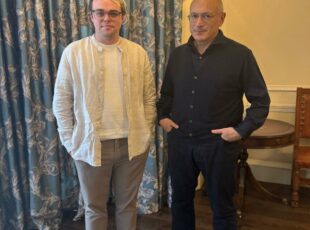
We will not see democracy in Russia for another 20 years. This prediction was made by former Russian oil magnate and current opposition figure Mikhail Khodorkovsky in an interview with journalist and Delfi publisher Hans H. Luik.
In this in-depth interview, Mikhail Khodorkovsky discusses Russia’s future after Vladimir Putin, the prospects for democracy, possible scenarios for a change in power, and the West’s mistakes in assessing Russia’s political system. In his opinion, even after Putin’s departure, rapid systemic changes should not be expected – according to him, this will require a generational change and a long period of time. Khodorkovsky states bluntly: “If we are talking about a change of power to a real European-style democracy, I fear that after four years of war, this has become highly unlikely – at least for the next 20 years.”
Khodorkovsky discusses in detail the possible mechanisms for the transfer of power in Russia, emphasizing that Putin’s departure is most likely only possible in the event of his death, in which case Prime Minister Mikhail Mishustin would constitutionally take over. However, according to Khodorkovsky, this would not mean stability – on the contrary, an internal struggle would begin in the country between different interest groups, security structures, and regional elites. In this context, he emphasizes that real power in Russia is determined not by capital, but by force: “There is a saying in Russia: gold buys everything, but weapons simply take everything.”
A large part of the interview is devoted to the topic of war crimes, responsibility, and lustration. Khodorkovsky rejects the possibility of mass lustration, arguing that millions of people in Russia are directly or indirectly connected to repressive structures, and that they will still live in the same country. In his opinion, the most important thing is to clearly distinguish between those who carried out orders and those who formulated them. Speaking about attacks on civilian infrastructure, he clearly identifies responsibility: “Attempts to use force to pressure people so that those tormented people will put pressure on their political authorities is terrorism.”
The interview also extensively examines the influence of Russian money on the West – from the financing of political parties to money laundering schemes. Khodorkovsky emphasizes that this is not just an economic issue, but a security problem, as these funds are used as a geopolitical weapon. In his view, the West has long underestimated this threat, which could have long-term consequences for both the European and US political systems.
Khodorkovsky clearly distances himself from the idea of a „good tsar“ and advocates a parliamentary, federal model for Russia, although he acknowledges that such a system will be difficult to implement in the coming decades. His approach is consistently based not on idealistic visions, but on historical experience and the logic of realpolitik, in which, as he repeatedly emphasizes, politics remains “the art of the possible.”
The interview was conducted by Hans H. Luik and was originally published in Delfi
You can listen to the interview in the video there or on YouTube:
Interview language: Russian.