Mikhail Khodorkovsky: Banning my book shows the fragility of Putin
Russian dictators don’t last long past the incumbent’s age of 73. Whether by age, incapacitation or insurrection, he will soon be gone
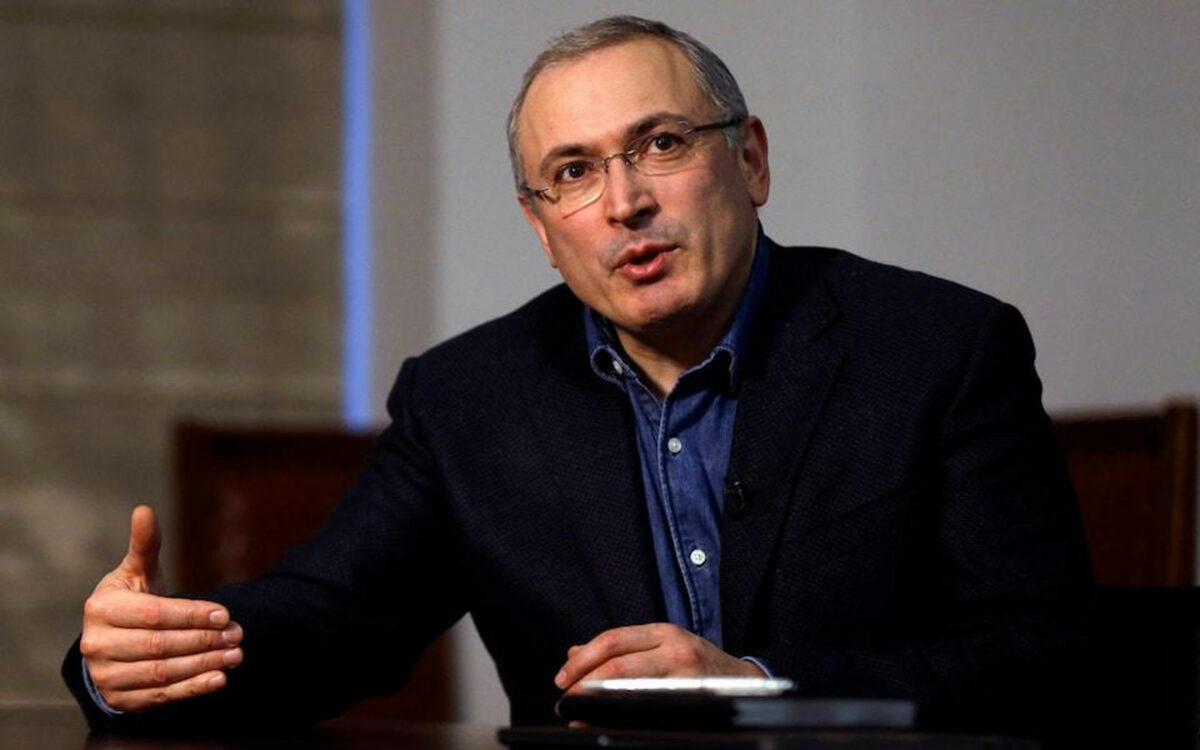
By Mikhail Khodorkovsky
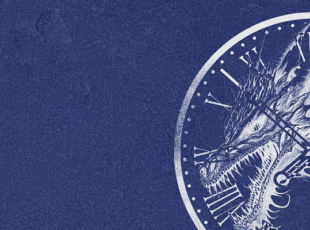
I recently received notice that my political manifesto for a liberal, democratic Russia – entitledHow to Slay a Dragon – has been declared “extremist material” by the Kremlin.
This sanction, on a book that dares to proffer an alternative to Vladimir Putin’s authoritarian regime, is laughable. It also tells a highly informative story of the weakness and paranoia currently running through the Kremlin.
Proscribing my book, which the Russian authorities have known about for four years, is just one of a series of desperate political charges levelled at the rapidly unifying and strengthening Russian opposition in exile.
In October, members of the Russian Anti-War Committee that I founded along with other prominent pro-democratic Russians in 2022 to oppose the Putin regime and its invasion of Ukraine, were designated terrorists and accused of planning to seize power.
This month, the Supreme Court of Russia accepted a lawsuit to recognise the Anti-War Committee itself as a terrorist organisation, with a view to banning its activities within Russia.
How to Slay A Dragon – with its roadmap to a federalised, democratic, dictator-free Russia – is now “extremist” material. And I was separately fined 50,000 roubles for “violating the regulations regulating the activities of foreign agents”.
This is a significant change of approach from Putin, who for decades always preferred to attack political opponents with invented “non-political” charges.
I should know: after I first called out corruption in his administration in 2003, I was imprisoned for 10 years in Russia’s harshest jails. It was clear that the reasons for this were political – Amnesty International declared me a prisoner of conscience and a global campaign was launched for my release. But the supposed “crimes” I had committed were all economic.
The same was true with Alexei Navalny, another of Putin’s political opponents. He spent two long spells in prison on clearly fabricated charges of fraud and embezzlement. The second of these ended in his murder and confirmation of this fact by the UK’s Foreign Secretary Yvette Cooper, two years after his death, was immensely vindicating for all of us who’ve been pushing for the truth, and are continuing to call for justice for his killing.
Other opponents, such as Alexander Litvinenko, Boris Nemtsov and Anna Politkovskaya were also assassinated on Putin’s orders or with his approval, rather than him ever confronting their ideas publicly.
Putin has previously avoided admitting political motivations wherever possible in his persecution of political opposition, because he did not want to acknowledge that it existed. Now, however, the pro-democratic Russian opposition in exile is growing too loud for him to ignore.
In October, the Parliamentary Assembly of the Council of Europe (PACE) established a “Platform for Dialogue” with the Russian opposition in exile, including the Anti-War Committee. It is a mostly symbolic move, but a hugely significant one nonetheless, as it gives legitimacy to the alternative to Putin’s regime for the first time in the eyes of a recognised international body.
The Kremlin reacted furiously, declaring members of the Anti-War Committee terrorists for allegedly peddling lies that we were preparing for a “violent seizure of power” and “financing Ukrainian paramilitary nationalist units”. They even referenced the Anti-War Committee’s Berlin Declaration from 2023, where we called for the end of the Putin regime.
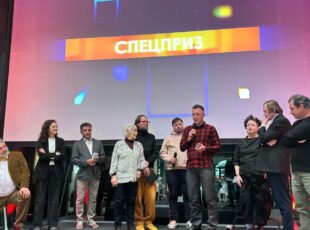
On January 28, I was present at the Platform for Dialogue’s first meeting, where PACE reiterated support for those opposing the war and endorsed our vision of a future, transformed Russia under the principles of democracy and international cooperation.
Within days, my book was proscribed and I was fined. Within weeks, the Russian Supreme Court lawsuit was filed to declare the Anti-War Committee a terrorist organisation.
None of these absurd charges will stop us. We’ll continue to increase our presence at PACE and with parliaments and international organisations globally.
At the same time that we make progress, problems mount for Putin. There is growing dissatisfaction over a faltering economy, crumbling infrastructure and the social disruption of hundreds of thousands of men returning from the Ukraine War.
The repression of dissident voices is also growing. The year 2025 saw a record number of treason and espionage charges opened up against critics of the war in Ukraine.
What remains of civil society is outlawed and any form of organised resistance is blamed on “foreign agents” or “undesirable organisations”. Likes on social media or pledge of support for Ukraine put hundreds of Russians behind bars. Direct criticism of the war has been criminalised with prison sentences of up to 15 years.
Outside of Russia, international isolation brought on by Putin’s invasion of Ukraine is forcing him into an increasingly unequal and uncomfortable relationship with China, whilst his weakness on the world stage has been exposed by his failure to dissuade US attacks on allies, such as Venezuela, Iran and Syria.
Putin and his inner circle have built up a gangster state, based almost entirely around the bullying, scheming and repressive tendencies of one man. But Putin is 73 years old now, and history shows us that Russian dictators do not tend to last long past that age. Whether by age, incapacitation or insurrection, Putin will not be around forever, and he will leave a vacuum behind him when he goes.
What he and his cronies are worried about now, is that the anti-war Russians in exile are getting united and are seen by the Western powers as legitimate alternative to Putin’s regime. All Western leaders who want to put pressure on Putin should engage with the Russian democratic anti-war opposition – to increase its international standing and to continue a formal dialogue.
How to Slay A Dragon is a vision of Russia freed from the ruin of autocracy. It’s a vision of a decentralised, federal, parliamentary republic that shares the power previously concentrated in the hands of one man. Putin has shown us just how nervous he is that this vision might come true.
Mikhail Khodorkovsky is the founder of the New Eurasian Strategies Centre and co-founder of the Russian Anti-War Committee
The article was first published in The Telegraph