The Journalism As A Profession Award Winners For 2025 Announced
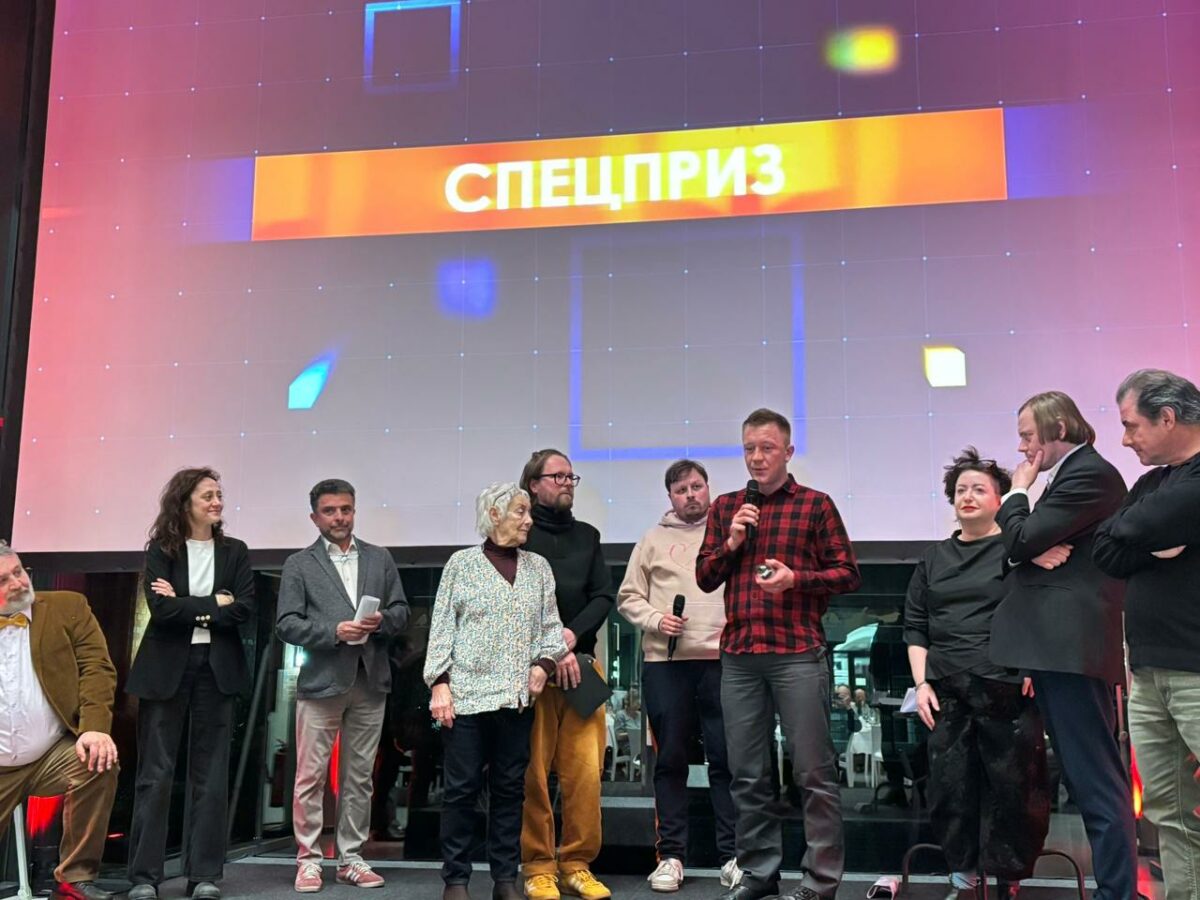
On Saturday in Berlin, we held our annual Journalism as a Profession Awards ceremony. It feels like only yesterday that we at Open Russia first founded the award, but it has been 10 whole years! As always, a huge number of talented journalists were nominated for their groundbreaking work. The prize recipients are listed below – please do read and watch their materials. And, of course, my heartfelt congratulations go to the winners!
Over 12,000 complaints about commanders killing their own soldiers, filed with Russian military prosecutors over three and a half years of war. A team of journalists tracked the officers doing it and identified over 60 by name:
The investigation, “Обнулители” (The Nullifiers) published in Verstka, by Ivan Zhadaev, Olesya Gerasimenko, Rina Richter, and Ivan Smurov documents how Russian officers execute their own troops through beatings, forced assaults, and drone strikes on the wounded: https://verstka.media/im-pohuj-kogo-obnulyat-kak-kaznyat-v-rossijskoj-armii
It just won Best Investigation at the 2025 “Journalism as a Profession” awards, an annual prize for the best independent Russian-language journalism.
Let me tell you about the winners across all nine categories — each of them is a small window into what Russia has become on 5th year of this war.
Mediazona won Best Long-form Story for “Case of the 24,” the story of Ukrainian Azov fighters who were tortured in Russian captivity, tried in a Rostov court, and partially exchanged. By Sofya Krylova, Elena Dymova, Dmitry Shvets, and Elizaveta Nesterova. https://zona.media/article/2025/03/26/azov-prigovor
Alexandra Arkhipova and Yuri Lapshin won Best Analysis for Re: Russia, having documented 213 new Stalin memorials erected across Russia since 1995, with 16 in just seven months of 2025 alone: https://re-russia.net/expertise/0328/
Best Regional Story went to Vladimir Sevrinovsky at Novaya Vkladka for a piece on why indigenous peoples of Russia’s Far East go to war, in communities where survival economics have eroded every principle and recruitment thrives on poverty: https://thenewtab.io/pochemu-korennye-narody-dalnego-vostoka-teryayut-muzhchin-na-vojne-v-ukraine/
Katerina Gordeeva won Best Interview for her conversation with Alla Pugacheva, the biggest star in the history of Russian pop music, who left the country after the invasion: https://www.youtube.com/watch?v=D6rFxVPz7UI
The Best Video Document winners cannot be named or linked, for the safety of the authors.
Best Digital Channel went to Ksenia Luchenko’s Telegram channel “Orthodoxy and Zombies,” which tracks the Russian Orthodox Church’s entanglement with the war: https://t.me/orthozombies
Best Podcast: Activatica’s “Prisoners: System of Terror” — for documenting the forced disappearance of Ukrainian civilians by Russian forces. Thousands abducted, possibly tens of thousands: https://prisonersofrussia.org/en/
The jury’s special prize went to Sergei Yerzhenkov for “Kushnir,” in
Votvot.TV about Pavel Kushnir, a concert pianist with five YouTube subscribers who posted anti-war videos, was arrested for “inciting terrorism,” and died on hunger strike in pretrial detention at 39. https://votvot.tv/a/33620828.html
These stories exist because people risked everything to report them. In one of the categories, the winners cannot be named, and that alone tells you what it means to practice journalism in Russia today.
Independent journalism in Russia has not died. It has gone underground, into exile, into enormous personal risk, and this is work that deserves to be read.