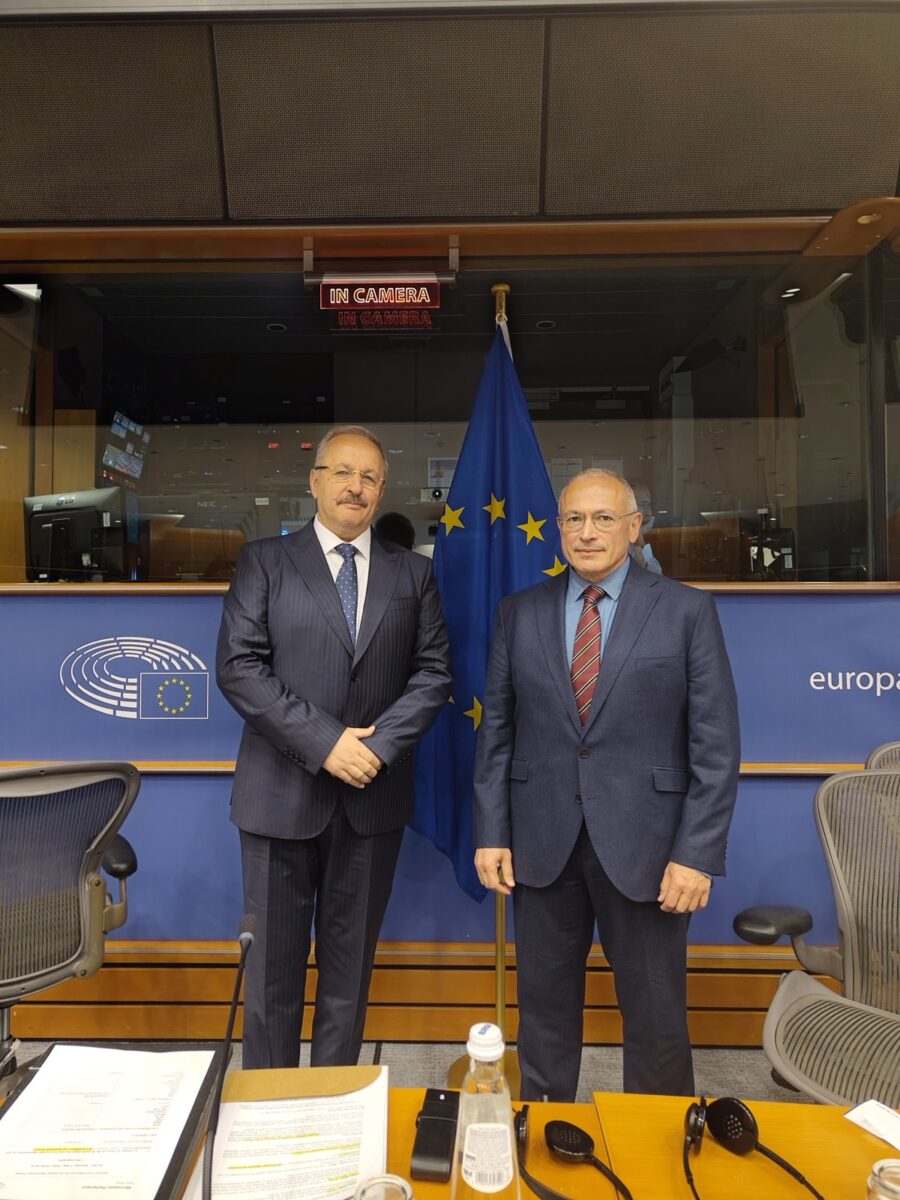
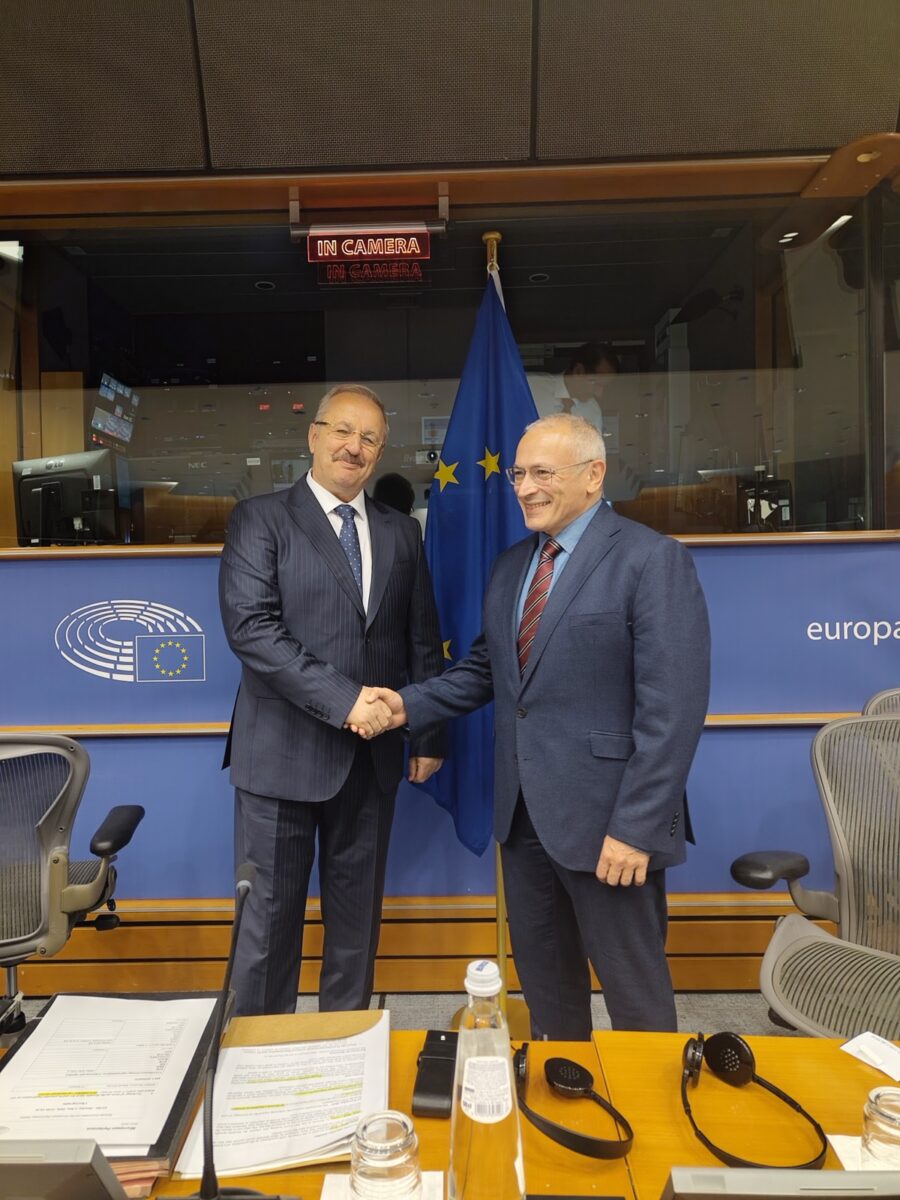
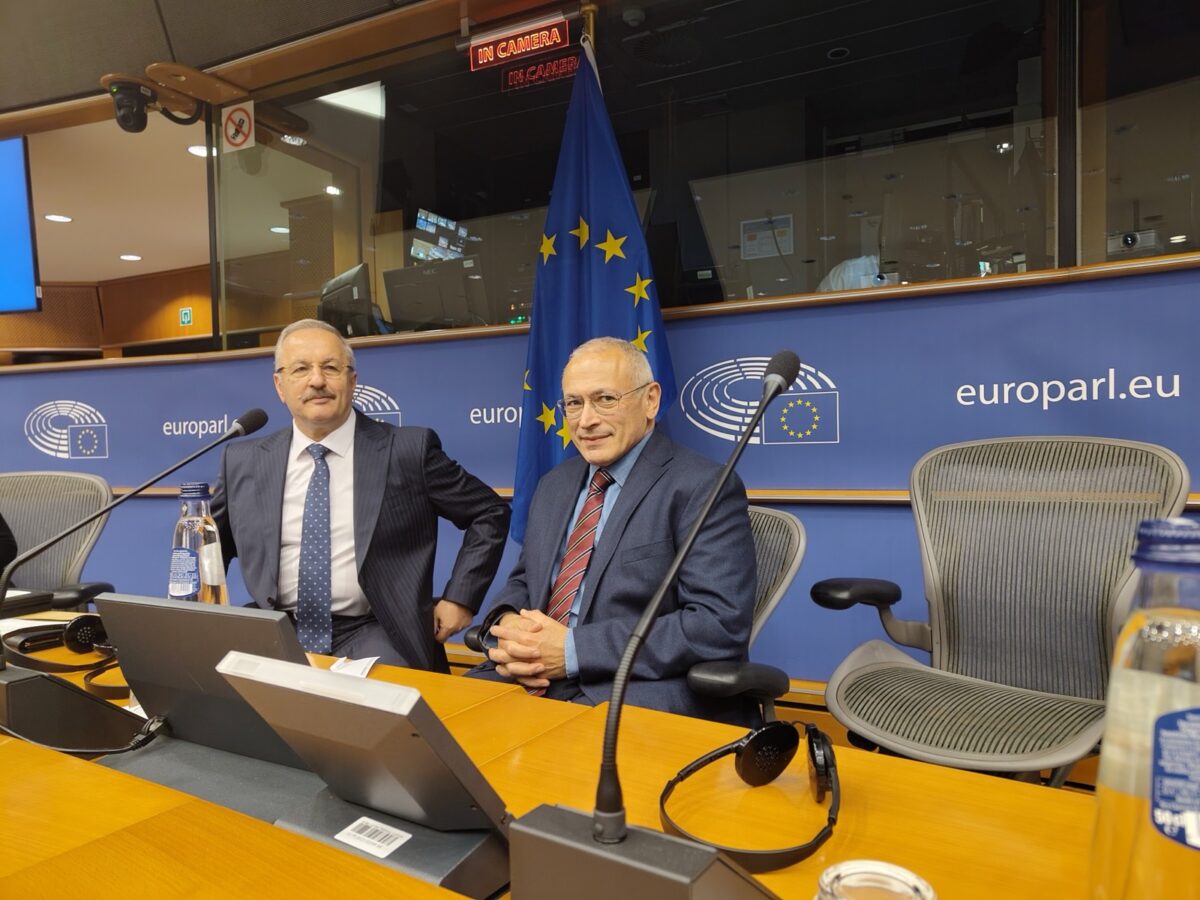
Khodorkovsky in the European Parliament: How the Kremlin Exports Repression to Europe
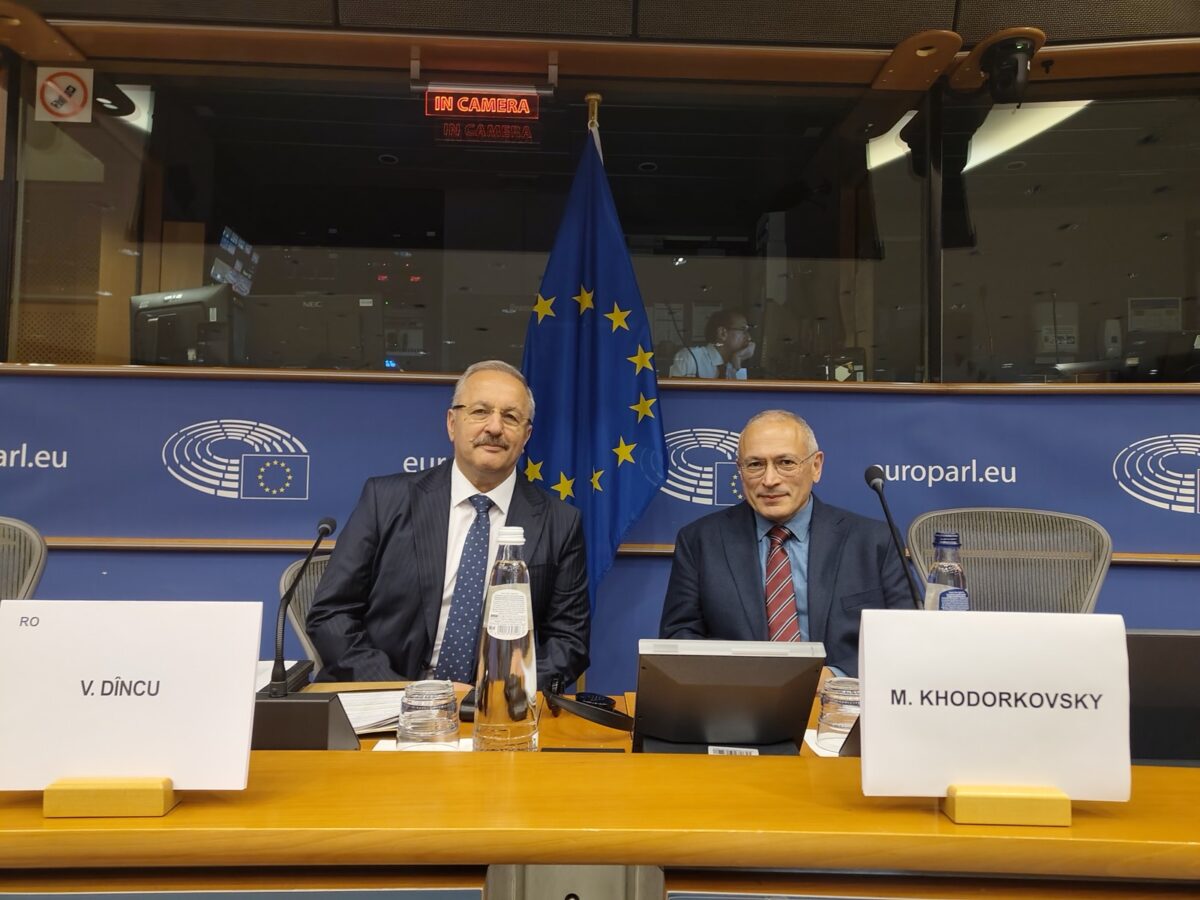
Madam Chair, distinguished Members of the Committee,
first of all, let me thank the European Parliament and the Special Committee on the European Democracy Shield for the invitation and for your readiness to discuss a topic that for a long time was considered secondary, but in fact has become one of the central instruments of Russia’s hybrid war against Europe: the Kremlin’s blacklists.
I would like to extend my particular gratitude to Mr Mikka Aaltola, who was the first to reach out with an invitation, and to recall that Finland from its own experience knows what prolonged and systemic pressure from the Kremlin means.
Allow me to say literally two words about myself, so that it is clear from which position I am speaking. I have been working on Russian authoritarianism, political repression and hybrid threats for more than ten years – since my release from Putin’s prison, where I spent over a decade under a politically motivated sentence.
I have founded and continue to support several projects:
- The Dossier Center, an investigative organisation that documents corruption, illicit influence and hybrid operations linked to the Kremlin;
- NEST, a policy think‑tank that helps European and transatlantic decision‑makers to develop strategies for dealing with Russia after Putin;
- Human‑rights projects providing assistance to political prisoners, anti‑war exiles and Ukrainian prisoners of war;
- Counter‑propaganda initiatives whose combined audience exceeds one billion views per year.
I am a co‑founder of the Russian Anti‑War Committee and a member of the Russian Platform at the Parliamentary Assembly of the Council of Europe, organisations where for several years we have been discussing the very same issues that are on your committee’s agenda: hybrid threats, transnational repression and the protection of democracy.
The Kremlin’s blacklists are not a “symbolic gesture” and not a minor diplomatic irritation, but a systemic instrument of hybrid warfare and transnational repression.
Let me begin with some context. The practice of blacklists in Russia goes back to the Soviet period, when informal registers of “unreliable” persons determined who was allowed to work, study, publish, and who would be sent into internal exile or to a labour camp, or pushed into inner emigration. This was a system of social control based on fear and uncertainty.
Likewise, lists of political enemies of the regime used for provocations, pressure, blackmail and, at times, physical elimination are nothing new.
The Putin regime has modernised this system. The state is still run by people who originate from the security and intelligence structures of the late Soviet Union, and the logic of “if you are not with us, you are against us, and therefore everything is permitted” remains fundamental.
In a globalised world, blacklists have become for the Kremlin a convenient tool of hybrid warfare. The Dossier Center’s work shows that contemporary Russian hybrid campaigns are not only about propaganda, cyber‑attacks and sabotage, but also about a carefully engineered system of pressure on individuals through ostensibly “legal” instruments: criminal cases, registers of “extremists” and “terrorists”, visa and passport restrictions. The goal is not so much to imprison everyone whom the Kremlin dislikes, as to force people to live in a permanent state of threat: today you can still travel, open a bank account and speak at conferences; tomorrow you may find yourself on a wanted list, at risk of arrest or of your accounts being frozen.[6][3]
The EUDS Committee has rightly put two questions before me: how does the Kremlin use blacklists against European politicians, and how does it use them against Russians abroad. Allow me to briefly address both dimensions.[2][7]
The first dimension is pressure on European politicians, journalists and civil‑society activists.
The Kremlin places you on blacklists precisely when you are doing what you are supposed to do in a democratic system: supporting Ukraine, voting for sanctions, condemning war crimes and exposing corruption. This is a targeted catalogue of obstacles to the exercise of European political will.
Unlike EU sanctions, the Russian lists are opaque: criteria are not explained, the lists themselves are often not published, and there is no genuine avenue for appeal. This is not law enforcement; it is political theatre and a psychological operation.
It is crucial to draw a clear distinction here: EU sanctions and the Kremlin’s blacklists are phenomena of fundamentally different nature. EU sanctions are grounded in Union law, laid down in public regulations and decisions of democratically accountable Union institutions, subject to judicial review and accompanied by individual reasoning for each listed person. Russian blacklists have neither a transparent legal basis, nor a verifiable evidentiary record, nor independent judicial oversight. To portray these practices as equivalent from the European side is to play into the Kremlin narrative of a “mirror response”.[8][3]
The problem, however, is not limited to the fact that you are included in some list. Once that happens, the hybrid machinery is activated: smear campaigns in loyal media, coordinated attacks on social networks, and supposedly “grass‑roots” initiatives that appear to come from ordinary citizens but are in fact orchestrated by Kremlin‑linked structures. These efforts are often conducted in the languages of EU Member States and in the name of their citizens. Unfortunately, not all individuals and not even all institutions possess sufficient psychological resilience to withstand such attacks.
In parallel, resources are channelled to reinforce your political opponents, both financially and through information support. All of this is wrapped in a “peace‑loving” message: let us restore normal relations with Russia; this is in the interests of our peoples.
The objective is straightforward: to demonstrate to every European politician that supporting Ukraine and resisting Russian aggression carries a personal cost – from threats and defamation to economic and even physical risks. This is not about isolated punitive measures against a few “troublesome” figures; it is an assault on the resilience of European democracy as a system.
The second dimension is transnational repression against Russians in Europe.
Here I speak from personal experience. The Russian authorities have designated me a “terrorist”, along with my colleagues from the Anti‑War Committee, and the Committee itself has been labelled a “terrorist organisation”. Most European states understand that this is a political decision that has nothing to do with real security. But in practice it means that on every trip, in every interaction with a bank or a migration authority, there is a “terrorism” flag in my file.
For thousands of Russian pro‑democracy activists, journalists and volunteers abroad, such labels mean not only a risk of detention on the basis of Russian requests, but also systemic everyday problems: banks close their accounts because compliance departments fear any link to “suspicious” individuals; migration authorities delay extension of status because they do not know how to interpret the Russian accusations.
Another instrument is the refusal to renew passports: people are effectively turned into de facto stateless persons, deprived of the ability to travel legally unless they return to Russia, where prison awaits them.
From the perspective of EU sovereignty, this is a direct challenge. The Kremlin is attempting to export its repressive practices by exploiting European legal and financial systems as an extension of its own punitive apparatus. This is no longer only a question of human rights; it is a question of the security and independence of your institutions.[4][9][6]
Let me now turn to what, in my view, can and should be done.
Your Committee is about to complete its work, and it is crucial that the issue of blacklists does not dissolve into the general catalogue of hybrid threats, but appears as a distinct block in your final report. Allow me to propose several concrete points which, in my opinion, merit consideration.[2][3]
First: recognise the Kremlin’s practice of blacklists as an element of hybrid warfare and a form of transnational repression affecting both EU citizens and Russian pro‑democracy actors in exile. This must be stated explicitly – without euphemisms and without attempts to portray it as “ordinary diplomatic exchange of restrictive measures”.
Second: recommend that the EU and candidate countries develop a common approach to Russian requests for legal assistance and extradition in cases where the persons concerned are Russian opposition figures, journalists or activists. Such requests must be assessed through the lens of transnational repression, not as routine criminal‑law cooperation.
Third: establish a harmonised mechanism for so‑called “grey passports” – travel documents or special residence statuses for victims of transnational repression whose passports are not renewed by Russia for political reasons. Without this, thousands of people are trapped: they can neither go back nor live a normal life in Europe. The EU can and should create a common standard that allows such individuals to prove their identity and move freely, so that they can take part in conferences like today’s and share information about what is happening in Russia.
Fourth: provide clear guidance on banking de‑risking – the mass closure of accounts of exiles and NGOs on the grounds of “reputational risk”. Together with DG FISMA, the Commission department for Financial Stability, Financial Services and Capital Markets Union, and national regulators, your Committee can propose a framework that obliges banks to distinguish between genuine security threats and politically motivated accusations by authoritarian regimes. Retail and commercial banking is not only about the privilege of managing multi‑billion accounts; it also entails a social responsibility to invest additional efforts in servicing the accounts of activists and NGOs subjected to repression. Otherwise, the EU financial system becomes an unwitting instrument of the very repression you are seeking to counter.[10][11][12]
Fifth: establish systematic cooperation with Russian civil society and experts. The Dossier Center, NEST, the Anti‑War Committee and other structures possess unique data on hybrid operations, networks of agents and specific cases of transnational repression. Russian independent media reach multi‑million audiences both in Russia and in Europe. I am doing what I can, but the scale of the problem goes far beyond my personal resources and those of my small group of fellow donors. EU funding in this domain is currently fragmented and reactive. Within the future Multiannual Financial Framework 2028–2035, there needs to be a dedicated, long‑term mechanism to support Russian pro‑democracy actors, investigative projects and independent media – not as an act of charity, but as an investment in Europe’s security.[1][6][8]
Sixth: step up engagement with Russian society and the Russian diaspora to explain EU policy on sanctions, blacklists and visas. Today the Kremlin exploits an information vacuum, persuading Russians that Europe is “punishing” them for their nationality, rather than for participation in aggression and repression. In response, the EU needs not only 200‑page policy documents, but also clear public communication in Russian, involvement of Russian experts in the debate, and regular consultations with the diaspora. This reduces people’s vulnerability to Russian propaganda and makes your own political decisions easier to implement.
Seventh: include in your recommendations a dedicated section on talent visas and targeted attraction of specialists from Russia. The best way to weaken the regime is to draw out the people who create real added value: engineers, scientists, IT professionals, cultural figures. This simultaneously reduces the Kremlin’s resource base and strengthens Europe’s own human capital.
Let me conclude by returning to the starting point of your work. The European Commission, within the framework of the European Democracy Shield and the European Centre for Democratic Resilience, has proceeded from a simple premise: NATO protects territory, while the EUDS and the ECDR must protect democracy. Today I want to add this: if you do not include the Kremlin’s blacklists and transnational repression among your priority threats, you will leave for the Kremlin a vast “grey zone” in which it can continue to exert pressure on people with impunity and, through them, on your institutions.
The situation is already worrying, but the outlook is even more alarming. According to our investigations, the Kremlin is systematically increasing its expenditure on propaganda, networks of agents, criminal connections and operations in the “grey zone” below the threshold of open warfare. Blacklists are a cheap and effective tool of this strategy. If Europe does not respond now, in a few years you will not only be discussing repression against opposition figures, but also sabotage of critical infrastructure, political campaigns directly financed through criminal channels, and entire diaspora communities taken hostage by Russian intelligence services.
If needed, I stand ready to provide your Committee and its Secretariat with additional materials – including investigations by the Dossier Center, NEST analytical briefs and documented cases of transnational repression collected by Project Ark – which may be useful in finalising your report and in the subsequent work of the European Parliament and the European Commission.
Thank you for your attention. I am ready to answer your questions.