Understanding Russia – ‘Russia and the West’
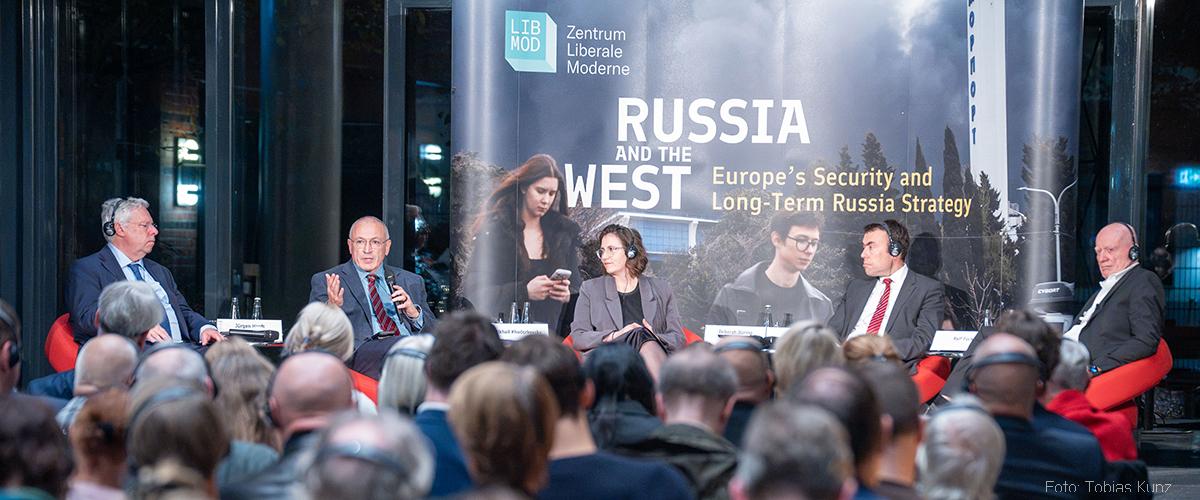
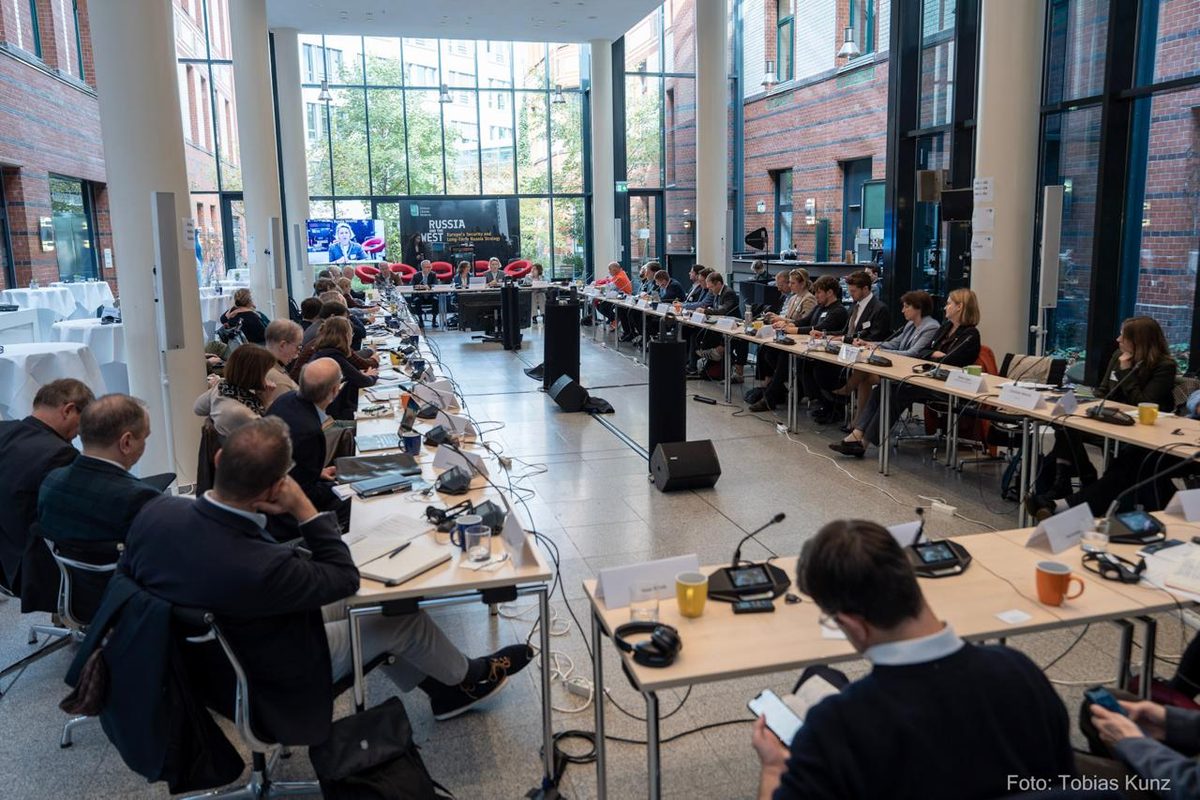
Understanding Russia – ‘Russia and the West’ expert conference in Berlin, held by The Center for Liberal Modernity (LibMod) in cooperation with NEST Centre.
A day of discussions on Russia’s wartime pressures, domestic dynamics and future.
The annual event took place on October 14th in Berlin and it brought together experts, policymakers and civil society to discuss prospects for ending the war, Russia’s domestic dynamics and Europe’s strategy for a post-war Russia.
Topic of the first panel was Europe’s Security and Long-Term Russia Strategy
Germany has a crucial role to play!
Russia’s war is expanding. In Ukraine, missiles and drones are claiming an ever-growing number of civilian lives, while acts of sabotage and drone incidents are increasing at an alarming rate in Germany and across Europe. What can and should we do to stop Putin’s regime? We discussed this question with members of the German Bundestag and experts at our panel discussion, “Russia and the West”. Among the participants was prominent Kremlin critic Mikhail Khodorkovsky.
A recurring theme throughout the evening was Germany’s role as a leading power in Europe, particularly as the United States under Donald Trump retreats from its traditional leadership role. Trump’s recent diesel deal with Vladimir Putin has caused considerable consternation. “Germany is the engine of Europe,” declared Mikhail Khodorkovsky. Representatives of Germany’s governing coalition sought to demonstrate that they were prepared to live up to this responsibility.
Nils Schmid, an SPD foreign policy expert who currently serves as Parliamentary State Secretary at the Federal Ministry of Defence, stressed not only that military support for Ukraine must continue, but also that efforts should be made to bring the Trump administration back on course: “We are trying through every available channel to make it clear to the United States that supporting Ukraine is also in America’s interest.”
Germany Is Ukraine’s Strongest Supporter – and Will Remain So
Jürgen Hardt, foreign policy spokesperson for the CDU/CSU parliamentary group in the Bundestag, made a similar argument. During the Greenland crisis, for example, Europeans had demonstrated that, when it really mattered, they could take Trump’s proposals “off the table”. The CDU politician emphasised Berlin’s unwavering commitment to Kyiv: “Germany is Ukraine’s strongest supporter and will remain Ukraine’s strongest supporter.”
Hardt also stressed that Ukraine must win the war and regain control over its entire territory. “That would be a defeat for Putin, but not for Russia,” he explained, since Russia would not be deprived of anything that had belonged to it before the invasion. “Russia can end this war without losing anything it did not have before,” he said.
Bringing Putin to His Senses
The most promising way to achieve this, Hardt argued, was to make Putin understand that he could not win. The goal was to “bring him to his senses”. Hardt also pledged that the German government would take more decisive action against Russia’s shadow fleet in the future.
This was music to the ears of Deborah Düring, foreign policy spokesperson for the Green parliamentary group in the Bundestag. “I’m looking forward to that,” she said. At the same time, she warned of the consequences of further hesitation, given Germany’s growing responsibility: “If Germany does not continue to push forward decisively and bring Europe along with it, we have a problem.”
She added: “If we really want Putin to know that we stand unconditionally with Ukraine, we must act much faster.” Germany, she argued, could do “a great deal more”, both militarily and in the civilian sphere.
At the same time, Düring stressed the importance of maintaining public support for a resolute policy on Ukraine, especially now, as voices questioning it grow louder. We must never tire of explaining that what is ultimately at stake is Europe’s security — our own security. Moderator Ralf Fücks asked Mikhail Khodorkovsky where Europe could identify vulnerabilities that would allow it to significantly weaken Russia’s ability to wage war. The former oil businessman, who spent ten years in a penal colony after supporting Russia’s democratic opposition, identified several possibilities.
First, sanctions should be strengthened and enforced more effectively. Germany, for example, could use its good relations with Beijing to persuade China to reduce technology exports to Russia, which are helping Moscow circumvent sanctions. Russian engineers and other skilled professionals could also be attracted to well-paid jobs in Germany and elsewhere. Given Russia’s acute shortage of skilled workers, this could significantly weaken the country, Khodorkovsky argued.
Second, Europe needed to substantially increase its military commitment. According to Khodorkovsky, Russia spends $250 billion a year on the war. “To believe that $40 to $60 billion from Europe is enough to stand up to Putin is naive,” he said.
Asked whether Putin could be “brought to his senses” at all, Khodorkovsky acknowledged that it was conceivable he might stop the war if the political costs of continuing became greater than those of ending it. At present, however, he considered this highly unlikely. The Kremlin leader was pinning his hopes on electoral victories by Germany’s AfD and Marine Le Pen’s Rassemblement National in France, both of which have promised to end support for Ukraine.
“Putin is still looking at Europe and saying: If Germany and France decide to stop supporting Ukraine, the front will collapse. And so he says: In that case, I’ll simply carry on.”
Düring and Hardt did not entirely agree on this point. While the Green politician expressed concern that calls to end support for Ukraine had recently been growing louder “not only on the fringes of the Bundestag, but also in its political centre”, Hardt expressed confidence that the governing coalition would “manage to hold things together”.
As Long as Putin Remains in Power, There Can Be No Peace
Khodorkovsky, meanwhile, was convinced that there could be no genuine peace as long as Putin was alive and in power – two conditions he regarded as inseparable. “For Putin, the war has become a means of political survival,” he argued.
Giving up the occupied Ukrainian territories would mean the end of Putin’s regime. According to Khodorkovsky, this could only happen following a Russian military defeat, which he currently considered virtually impossible.