The war in Ukraine could last another year/ Putin aims to weaken Kyiv during the winter
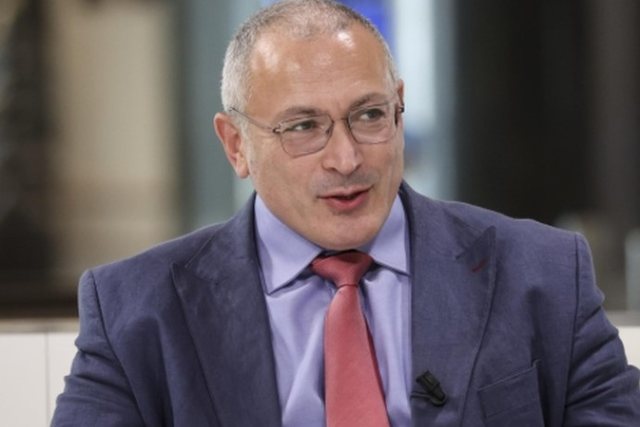
Mikhail Khodorkovsky warns that Russia has no intention of stopping the war against Ukraine and may use the winter to hit energy infrastructure. According to him, Moscow also aims to exploit political divisions in Europe to weaken Western support for Kyiv.
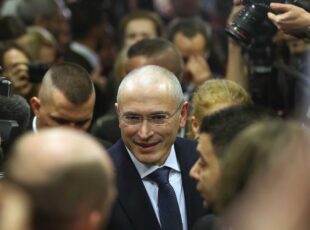
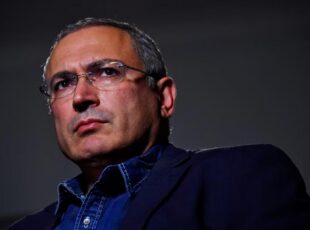
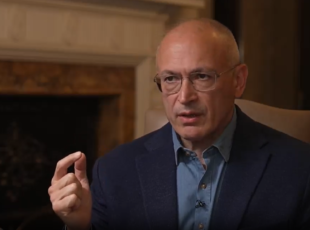
The war in Ukraine could drag on for another year or longer, with Russia expected to intensify pressure on the Ukrainian population during the winter months, Mikhail Khodorkovsky, one of Russian President Vladimir Putin’s most prominent critics, said in an interview at the Warsaw Security Forum.
The former Russian businessman, who spent ten years in Siberian prisons, says the Kremlin is showing no signs of wanting to end the conflict. According to him, the Russian strategy aims to weaken Ukraine’s resistance through constant attacks and pressure on the civilian population.
Khodorkovsky warns that the winter could be particularly difficult for Ukrainians, as Russia may continue attacks on energy infrastructure. According to him, power outages and difficult living conditions are intended to spread fear and lower the morale of the population.
The risk of political divisions in Europe
Another factor that could influence the continuation of the war is, according to Khodorkovsky, the stability of European support for Ukraine. He believes that Russia is counting on political divisions within Western countries, which could affect financial and military aid to Kyiv.
Political developments in key European countries, including France, Spain and Italy, could have consequences for common policy towards Moscow. According to him, if one of the major European states decides to cut off aid to Ukraine, this could cause a political crisis in Europe.
Khodorkovsky also emphasizes the importance of cooperation between the countries of Northern and Eastern Europe, especially in the field of defense and integration of military systems. According to him, strengthening this cooperation is important for regional security and confronting potential threats.
The oil deal and the impact of sanctions
Commenting on the agreement between Donald Trump and Vladimir Putin regarding diesel oil, Khodorkovsky estimates that its impact on world prices will be limited, as will the economic benefit for Russia.
According to him, the additional revenue Moscow could gain would only be enough to finance the war for about a month. However, he warns that the political consequences of such an agreement could be more significant, as it could weaken the common stance of Western countries towards the Kremlin.
This, according to him, could also prompt other countries to seek the easing or lifting of sanctions on the Russian oil and gas sectors.
As for the economic measures imposed on Russia, Khodorkovsky believes they have not been enough to stop the war. He argues that the sanctions create economic difficulties for Moscow, but have not decisively hindered the functioning of its military machine.
Russia spends up to $300 billion a year on war
Khodorkovsky estimates that Russia spends between $250 billion and $300 billion a year on the war, calculating the costs in real purchasing power parity terms. Meanwhile, according to him, Ukraine has about $110 billion available.
He emphasizes that Russia’s ability to continue the conflict depends not only on financial resources, but also on the determination of the Russian leadership to continue the war, despite human losses.
Asked about the possibility of a compromise, Khodorkovsky said that a ceasefire could be theoretically possible, given the slow advance of Russian forces in Donbas. However, according to him, the current conditions do not create a favorable basis for ending the conflict.
He argues that the continuation of the war is closely linked to maintaining Putin’s power in Russia and that the Kremlin aims not only to weaken Ukraine, but also to deepen divisions between European countries.
According to Khodorkovsky’s warning, the outcome of the war will depend not only on developments on the battlefield, but also on Ukraine’s ability to maintain its resistance and Western countries’ ability to keep their support for it united.
The interview was originally published in the CNA